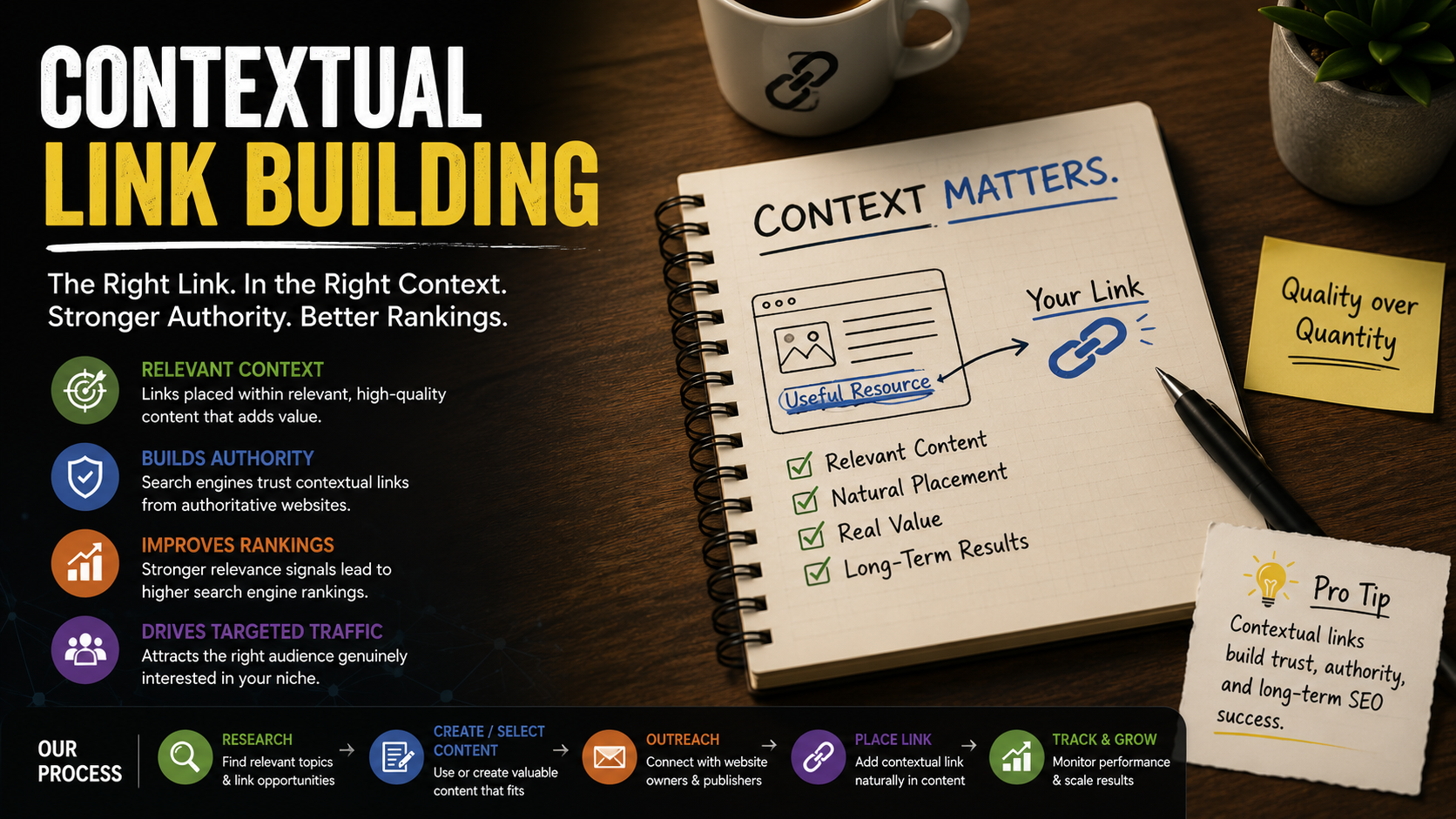
Contextual link building is often discussed in terms of rankings and traffic, but service-based businesses in particular need to understand how these efforts translate into actual bookings, appointments, and revenue. Simply knowing that contextual link building can improve search visibility is not enough; understanding how to measure its real return helps justify the investment and refine the strategy over time. This article breaks down how to think about ROI for contextual link building, which metrics actually matter for a service-based business, and how to avoid common measurement mistakes that lead to premature conclusions about what is working.
Why Measurement Matters So Much for Contextual Link Building
Unlike paid advertising, where results are immediate and easy to track, contextual link building produces effects that unfold gradually over weeks and months. This delayed feedback loop makes proper measurement especially important, since without it, business owners can easily misjudge whether their efforts are actually working or abandon a strategy just before it begins paying off.
Establishing clear tracking systems before beginning any of this link building campaign ensures you can accurately attribute changes in traffic, rankings, and ultimately bookings to the specific outreach efforts being made.
Key Metrics to Track for Contextual Link Building
Tracking these metrics together, rather than focusing on any single number in isolation, gives a much clearer picture of whether contextual link building is genuinely contributing to business growth.
Connecting Contextual Link Building to Actual Bookings
Set Up Proper Tracking Before You Begin
Before launching any This link building campaign, ensure your website analytics can distinguish organic search traffic from other sources, and that your booking or contact forms are properly tracked as conversions. Without this foundation, it becomes very difficult to connect new backlinks to actual business results later on.
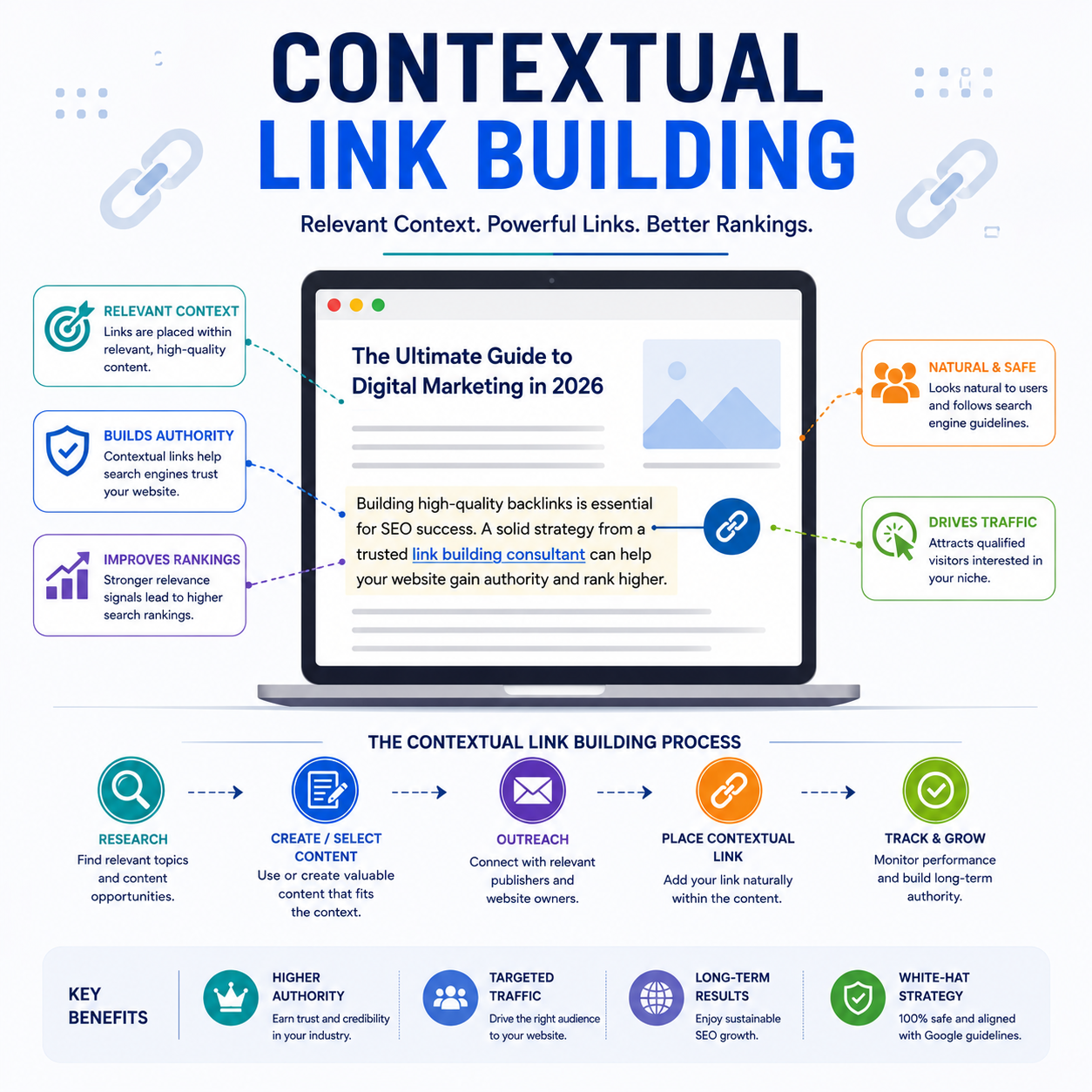
Compare Performance Before and After Campaigns
Reviewing organic traffic and conversion data from the months before a contextual link building campaign began, compared to the months after placements start appearing, offers a much clearer picture of impact than looking at any single month in isolation.
Track Specific Landing Pages
Since This link building typically targets specific pages rather than your entire website, monitoring the performance of those individual pages, rather than only looking at site-wide totals, provides a more accurate picture of which placements are actually driving results.
Account for Seasonal and External Factors
Service businesses often experience natural seasonal fluctuations in demand. When evaluating This link building results, it helps to compare performance against the same period in previous years rather than only recent months, to avoid mistakenly crediting or blaming your link building efforts for changes actually driven by seasonality.
Why Some Contextual Link Building Placements Perform Better Than Others
Not every backlink secured through contextual link building will perform equally well. Placements on websites with genuinely engaged, relevant local audiences tend to drive noticeably more referral traffic and conversions than similar links on larger but less locally relevant publications. Reviewing which specific placements are driving actual traffic and bookings helps refine future contextual link building efforts toward the types of sites and content that produce the strongest results for your specific business.
Common Measurement Mistakes to Avoid
Expecting Instant Results
This building requires time for search engines to discover, evaluate, and factor new links into rankings. Judging a campaign’s success after only a few weeks often leads to premature and inaccurate conclusions about its effectiveness.
Focusing Only on Link Count
Counting the raw number of links secured tells you very little about actual business impact. A single high-quality contextual link building placement on a genuinely relevant, well-trafficked site can outperform a dozen weaker placements combined.
Ignoring Assisted Conversions
Not every customer who eventually books your service converts on their very first visit from a contextual link building placement. Reviewing multi-touch attribution data, when available, can reveal that certain backlinks play an important supporting role even when they are not the final source of a booking.
Building a Realistic Reporting Cadence
Rather than evaluating contextual link building results weekly, which rarely shows meaningful patterns, most service businesses benefit from reviewing performance on a monthly or quarterly basis. This cadence allows enough time for search engines to process new links while still providing regular enough check-ins to catch any significant issues or opportunities for adjustment.
A simple, consistent reporting structure tracking the metrics outlined earlier helps business owners make informed decisions about whether to continue, expand, or adjust their contextual link building strategy over time.
Using Customer Feedback to Validate Contextual Link Building Impact
Beyond analytics dashboards, directly asking new customers how they discovered your business can provide valuable, if informal, confirmation of contextual link building impact. A simple question during booking or checkout, asking how someone found your service, can occasionally reveal that a customer read about you on a specific local blog or publication, directly connecting a contextual link building placement to a real, paying customer.
While this kind of feedback should not replace proper analytics tracking, it can serve as a useful, human confirmation that the strategy is genuinely reaching and influencing real people, not just moving numbers on a dashboard.
Adjusting Strategy Based on What the Data Shows
Once you have gathered a few months of consistent data, use it to refine future contextual link building efforts. If certain types of publications consistently drive stronger referral traffic and bookings than others, prioritize similar opportunities going forward.
Conversely, if certain placements generate very little measurable activity despite appearing to be relevant, it may be worth reconsidering whether that particular audience truly overlaps with your target customers. This ongoing cycle of measuring, learning, and adjusting is what separates a genuinely effective contextual link building strategy from one that continues indefinitely without ever improving its return on investment.
Frequently Asked Questions
How long should I wait before evaluating whether contextual link building is working?
Most service businesses should wait at least three months before drawing firm conclusions, since search engines need time to discover and factor in new links.
What is a realistic ROI to expect from contextual link building?
This varies significantly by industry and competition level, but businesses that track properly often find that the compounding, long-term nature of contextual link building produces a stronger return over a year or more compared to short-term advertising alone.
Should I track phone calls as well as online bookings from contextual link building?
Yes, if your service business relies heavily on phone inquiries, using call tracking tools alongside standard web analytics gives a more complete picture of how contextual link building contributes to actual business results.
Can I measure contextual link building ROI without expensive analytics tools?
Yes, even free tools can track organic traffic trends, referral sources, and basic conversion data, giving you enough information to reasonably evaluate your contextual link building efforts.
What should I do if measurement shows contextual link building is not working?
Before abandoning the strategy entirely, review whether placements were genuinely relevant and well-targeted, since poor results often stem from low-quality or irrelevant links rather than the underlying strategy itself.
Conclusion
Understanding how to properly measure contextual link building transforms it from a vague marketing expense into a clearly justified, data-backed investment for service-based businesses. By tracking the right metrics consistently over time and connecting them directly to real bookings and revenue, business owners can confidently refine their contextual link building strategy and continue investing in what genuinely drives growth.
To discover more insights and explore our full range of resources, we invite you to visit our alostoratv.org